Disposable sandboxes
One call gives you a copy-on-write clone of a base image, booted, with the guest agent answering. One more call destroys it. The base image is never written to, and outbound networking is off unless you ask for it.
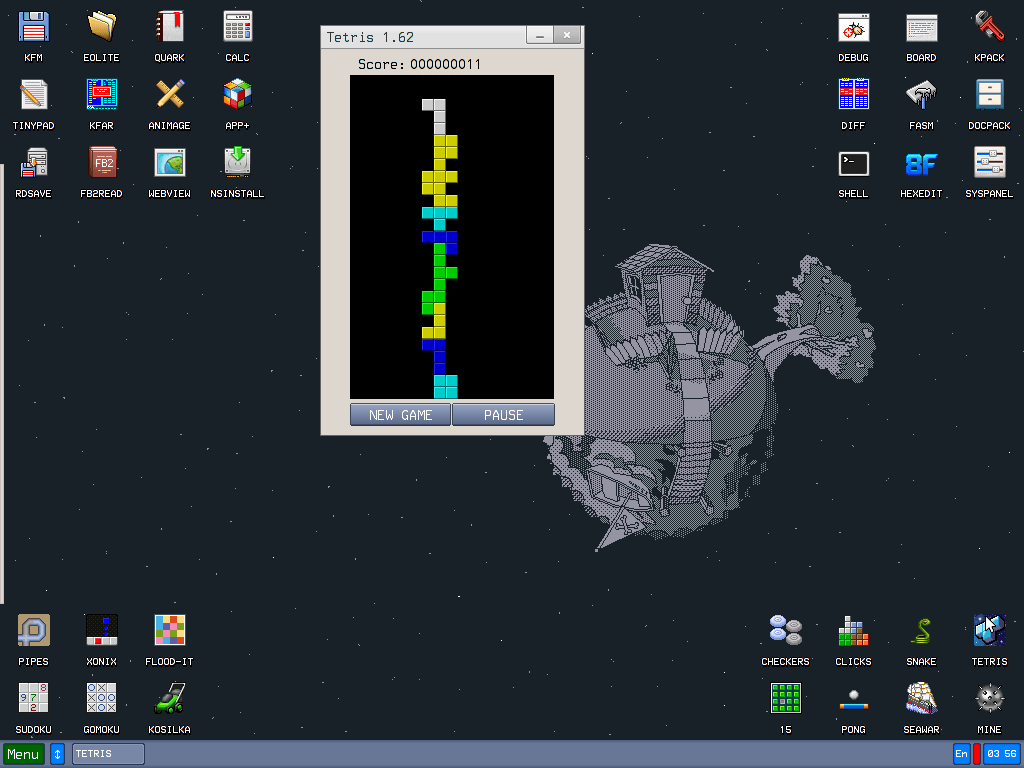
Disposable sandboxes
One call gives you a copy-on-write clone of a base image, booted, with the guest agent answering. One more call destroys it. The base image is never written to, and outbound networking is off unless you ask for it.
See and drive
Screenshots come from the framebuffer, so they work at a BIOS menu or a bootloader with no guest cooperation. Keys are injected as scancodes, which is why they work before an OS exists.
Live snapshots
Save RAM, devices and disks at a moment in time, keep working, then roll the whole machine back. Restore is instant because the memory came with it.
Inside the guest
With qemu-guest-agent installed, run commands and read or write files over virtio-serial. No SSH, no network, no credentials.
Give an agent a hypervisor
A short talk on building this, and the bug that taught me to check. Transcript on the talk page.
uvx mcqemu # run itclaude mcp add mcqemu -- uvx mcqemu # add it to Claude CodeRequires Linux with QEMU on the PATH. /dev/kvm access is optional; without it
guests run under software emulation, which works but is much slower.
New here? What is mcqemu? explains the shape of it in a couple of minutes, then the tutorial gets you to a running VM.

mcqemu is built and maintained by Supported Systems, a small studio that writes software for people who have to keep it running afterwards.
Visit supported.systems